
Quick Answer
Repair makes sense for isolated, stable, cosmetic damage on a slab whose base is still sound — a few hairline cracks, minor surface wear, one small settled corner. Replacement is the right call when cracking is widespread, sections have sunk or heaved to different heights, water pools on or beside the slab, or repairs keep reappearing, because those symptoms point to failure underneath the concrete that surface fixes cannot reach. The deciding question is not how the surface looks but why it failed.
Which driveway problems are genuinely repairable?
Surface-level problems on structurally sound concrete respond well to repair. Hairline shrinkage cracks can be sealed to keep water out. Minor spalling or scaling can sometimes be resurfaced. A single joint that has opened up can be re-caulked. If the slab is flat, drains properly, and the damage has not changed in a couple of years, maintenance-grade repair is a reasonable spend.
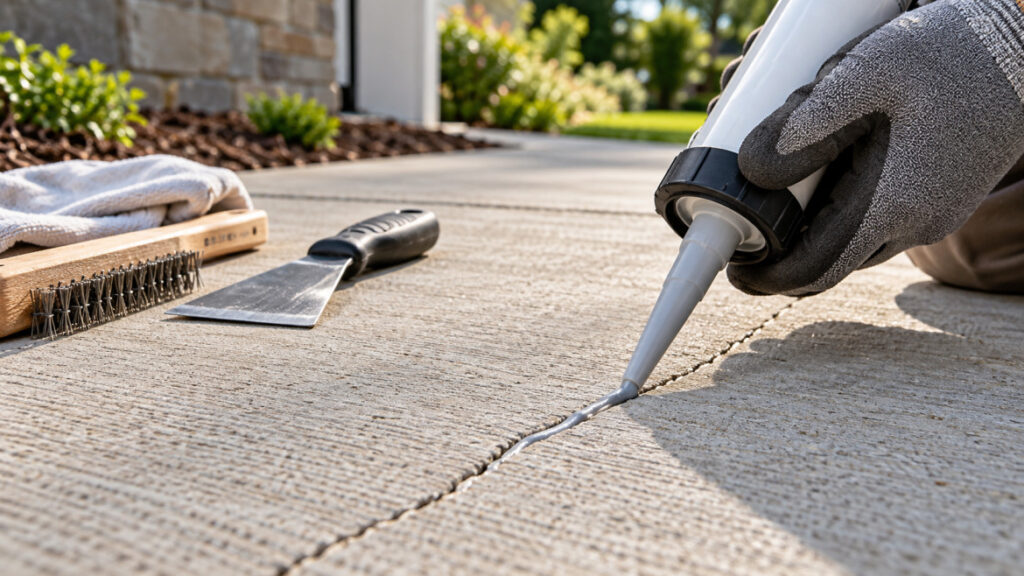
The honest caveat: a repair is only as durable as what’s under it. Fillers and overlays bond to the surface, but they cannot stabilize soil or rebuild a washed-out base. Any repair on a moving slab is temporary by definition.
What are the signs a driveway is past repairing?
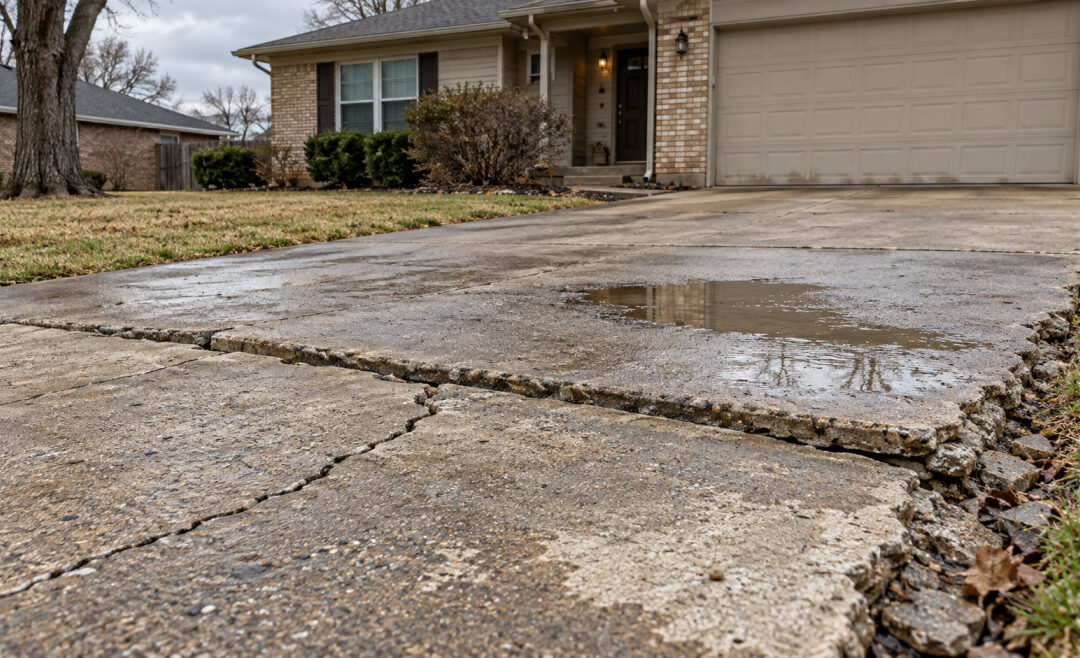
Certain patterns almost always indicate base or soil failure rather than surface wear:
● Cracks wide enough to catch a coin, or cracks that grow each season
● Offset cracks where one side sits higher than the other
● Whole panels that have settled, tilted, or heaved
● Water pooling on the slab or running toward the garage or foundation
● Crumbling edges and corners that keep breaking off
● A patch history — repairs that fail and get repaired again
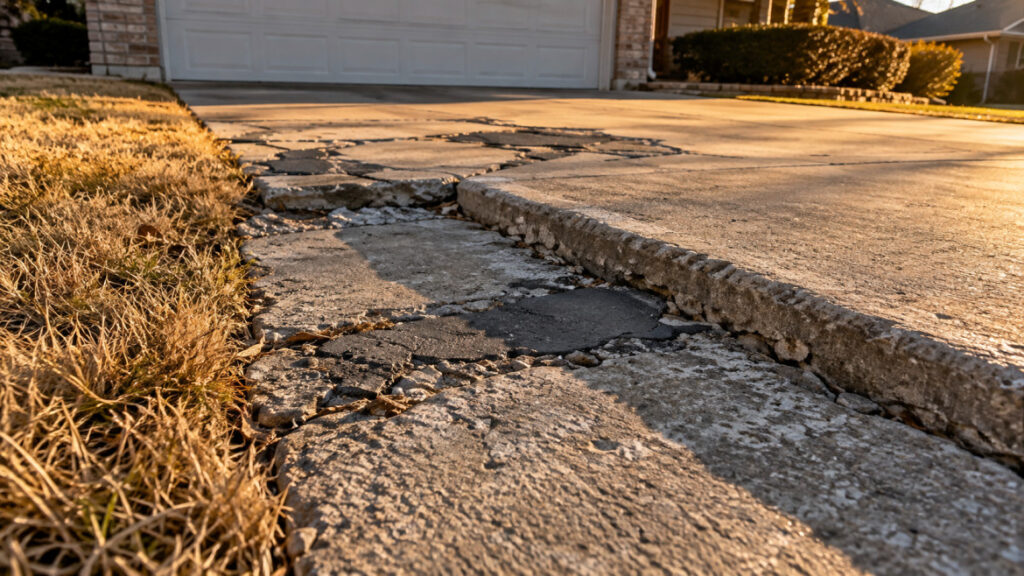
In Oklahoma these symptoms usually trace to expansive clay movement, water under the slab, or a driveway that was originally poured thin, unreinforced, or on a poor base. Those causes live below the surface, which is why full replacement may be the better option when the underlying base, reinforcement, or drainage also needs correction. Replacement allows those conditions to be addressed together instead of treating only the visible surface damage.
How do repair and replacement costs actually compare?
Repair wins on immediate cost and loses on cost per year when the slab is failing. Patching, crack filling, and small-area work cost a fraction of replacement, and for stable damage that’s the end of the story. On a failing driveway, though, repair spending recurs — new cracks appear, patches pop out during freeze-thaw winters, and the underlying settlement continues — while the eventual replacement still waits at the end.
Replacement is a larger one-time investment. Advanced Concrete Designs publishes a typical range of $8,000–$25,000+ for driveway replacements depending on scope, and financing through Lyon Financial (subject to credit approval and lender terms) exists precisely so homeowners can do the full project correctly instead of stretching out a cycle of patchwork.
Can I replace only the damaged sections?
Sometimes, and it’s worth asking about honestly. If one panel settled because a downspout washed out its base, and the rest of the driveway is sound, sectional replacement paired with a drainage fix can be a smart middle path. Two cautions apply. New concrete will not match twenty-year-old concrete in color, so expect a visible seam. And if the cause of failure — soil movement, bad original base, thin unreinforced slab — runs under the whole driveway, replacing one panel just moves the problem line. A site evaluation determines which situation you have; where water is the culprit, correcting grading or adding drainage belongs in the scope either way.
Is replacement a chance to upgrade, not just restore?
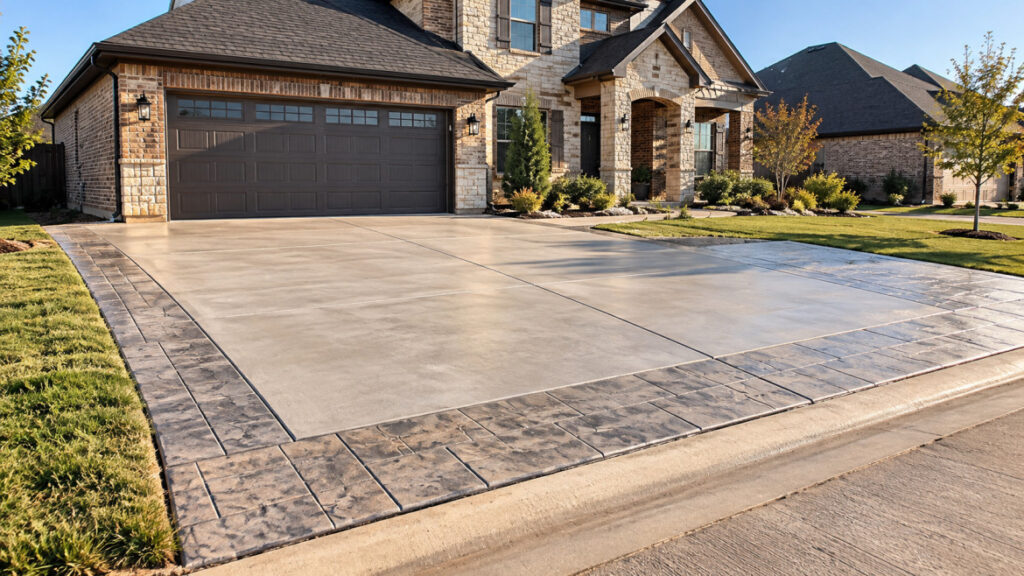
It is, and many homeowners treat it that way. Since the slab is coming out regardless, replacement is the natural moment to widen a driveway that never fit two cars, add a parking pad, fix the slope that always drained toward the garage, or move up from plain gray to a stamped or colored finish. Design changes cost far less as part of a replacement than as separate future projects, because demolition, access, and base work are already in the scope.
Frequently Asked Questions
How long should a repaired crack hold? On a stable slab, a properly cleaned and sealed crack can last for years with occasional re-sealing. On a slab that is still moving, expect the crack to reopen or reroute — the repair didn’t fail, the base did.
Is mudjacking or slab lifting an option for a sunken driveway? Lifting techniques can raise a settled but intact panel, and for the right slab they are legitimate. They do not address cracking, deteriorated concrete, or ongoing soil movement, so they suit a narrow set of situations best identified on site.
Will one cracked panel spread to the rest of my driveway? The crack itself won’t spread across joints, but the condition causing it can. If water or soil movement undermined one panel, its neighbors are usually next in line, which is why diagnosing the cause matters more than treating the crack.
Does a cracked driveway hurt home value? A visibly failing driveway reads as deferred maintenance to buyers and appraisers, and it is one of the first things visible from the street. Replacement is one of the more straightforward curb-appeal corrections a home can get, though exact value impact varies by property and market.
How do I know the new driveway won’t fail the same way? Ask what caused the old failure and what specifically changes: base depth and compaction, reinforcement, thickness, joints, and drainage. A replacement that copies the original construction inherits the original outcome.
Stop Guessing — Find Out What Your Driveway Actually Needs
The repair-or-replace call comes down to what’s happening under the slab, and that takes eyes on site. Book an on-site evaluation with Advanced Concrete Designs or call (405) 414-8560 for a written, no-pressure recommendation — including when repair is genuinely the smarter answer.