
Quick Answer
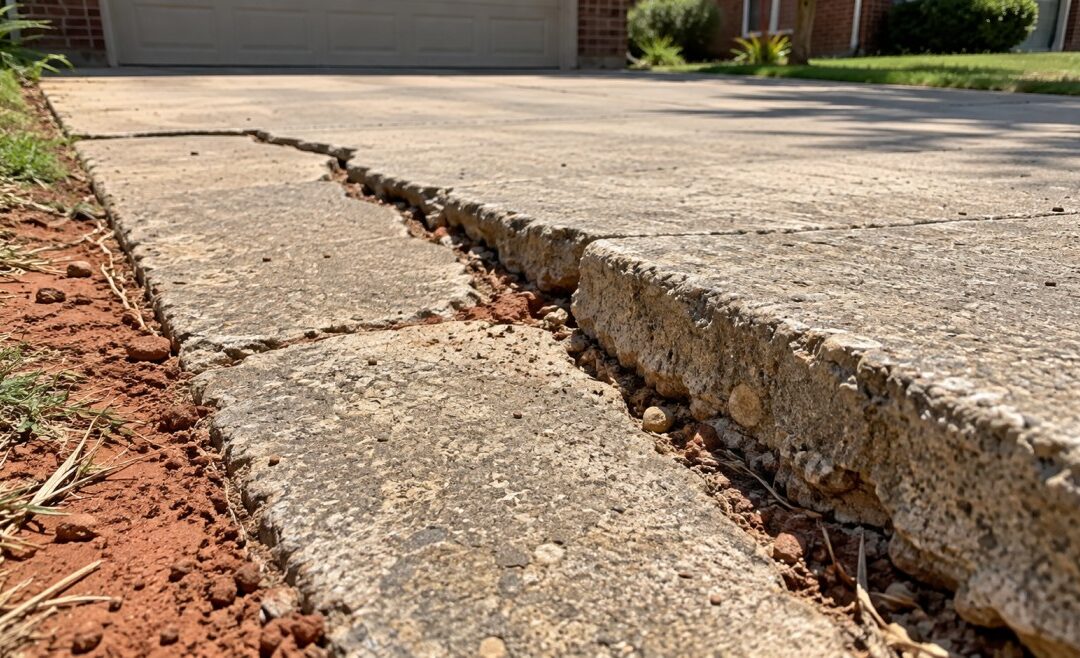
Concrete in Oklahoma cracks for three main reasons: expansive clay soils that swell and shrink with moisture and move the slab from below, freeze-thaw cycles that stress the surface each winter, and installation shortcuts such as thin slabs, weak base preparation, missing reinforcement, or poorly placed control joints. Hairline shrinkage cracks are normal in almost all concrete; wide, offset, or spreading cracks usually signal a base or soil problem that patching will not fix.
What role does Oklahoma’s clay soil play?
A large share of central Oklahoma sits on expansive clay. That soil absorbs water and swells during wet springs, then shrinks and pulls away during dry summers. A concrete slab riding on top of it gets lifted, dropped, and flexed season after season. Concrete is extremely strong in compression but weak in tension, so that flexing eventually shows up as cracks — often diagonal ones, or cracks paired with sections that sit at different heights.
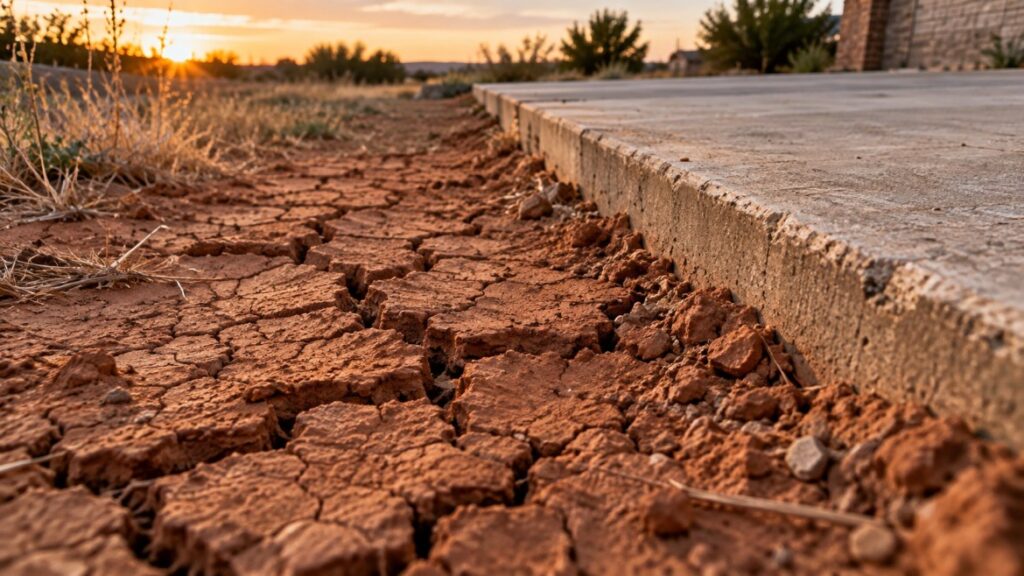
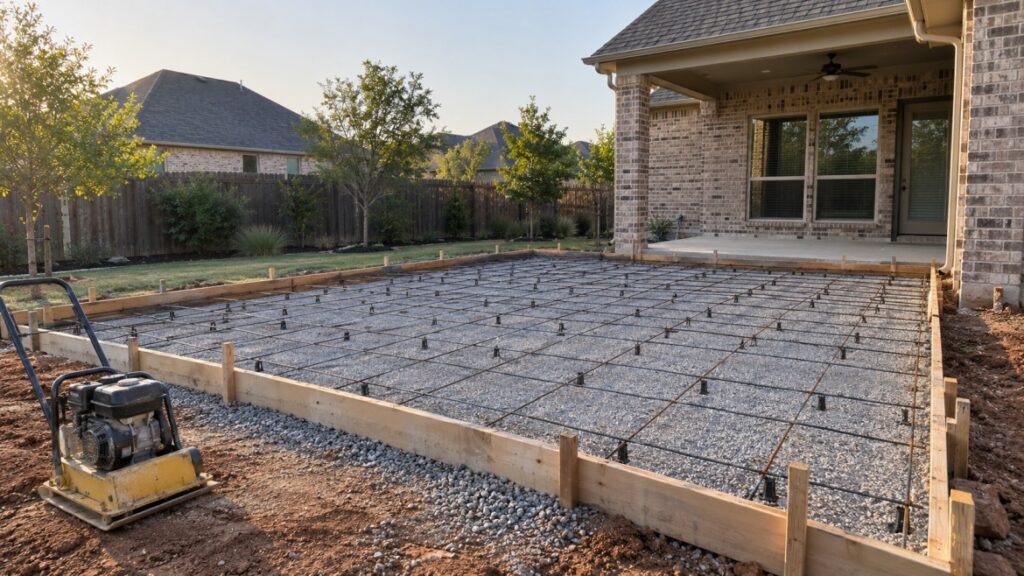
This is why base preparation matters more here than in stable-soil regions. Removing soft material, compacting the subgrade, and building a uniform base gives the slab consistent support, and steel reinforcement helps hold the concrete together when the ground still moves. Those details matter especially in a market with active clay soils, and Advanced Concrete Designs’ installation process emphasizes the preparation needed to support long-term performance.
How do freeze-thaw cycles damage concrete?
Water expands roughly nine percent when it freezes, and Oklahoma winters swing above and below freezing repeatedly rather than staying frozen. Moisture that has soaked into the slab’s surface pores, or pooled underneath it, freezes and expands, then thaws and lets more water in. Over years, that cycling causes surface scaling, spalling, and crack growth.
The industry’s defense is air-entrained concrete: microscopic air bubbles mixed into the concrete give freezing water somewhere to expand. American Concrete Institute guidance for concrete exposed to freezing and thawing addresses factors such as air entrainment, concrete strength, water-cement ratio, drainage, and exposure conditions. The exact concrete specification should be selected for the project and its expected exposure rather than reduced to one universal mix requirement.
Are hairline cracks something to worry about?
Usually not. Concrete shrinks slightly as it cures, and thin surface cracks from that shrinkage are close to universal — they are cosmetic, not structural. Control joints exist to manage this: those straight grooves cut into a slab are planned weak lines that give shrinkage somewhere tidy to happen instead of wandering across the surface.
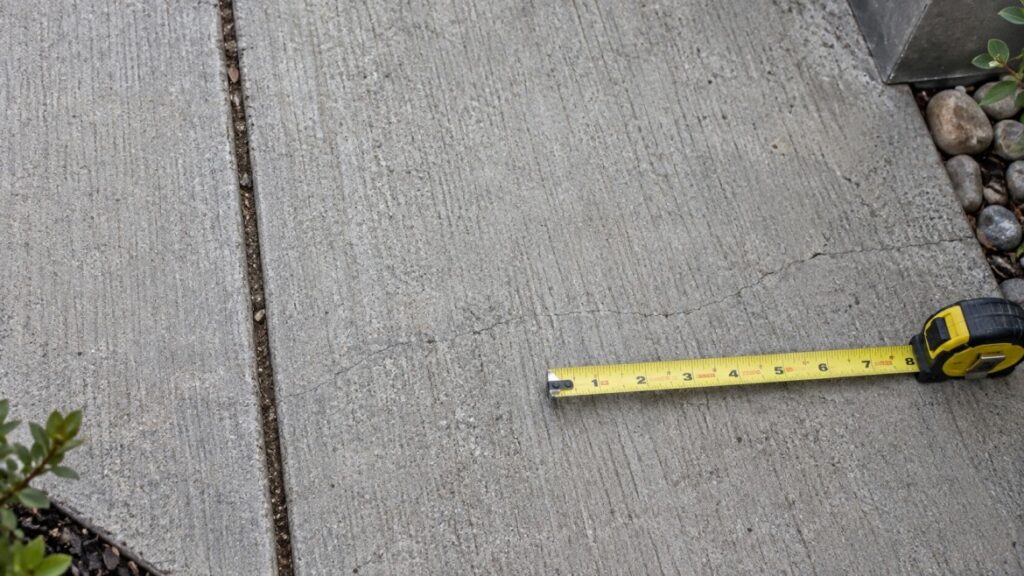
The cracks worth attention look different. Watch for cracks wide enough to catch a coin, cracks where one side sits higher than the other, cracks that keep lengthening, and clusters near corners or edges. Those patterns point to movement under the slab, not normal curing.
Why does water make everything worse?
Almost every serious cracking problem in this region has a water component. Poor grading lets rain pool beside or under a slab, saturating the clay and starting the swell-shrink cycle. Downspouts that dump next to a driveway erode base material. Water that undermines an edge leaves the corner unsupported, and unsupported concrete breaks under load.
Fixing drainage is often the difference between a replacement that lasts decades and one that repeats the old slab’s failure. Where a property has pooling, erosion, or grading problems, addressing them with French drains or grading corrections before or during concrete work protects the new surface from day one.
Can cracking be prevented in a new pour?
It can be managed to the point where it stays cosmetic. The controllable factors are a properly compacted, uniform base; adequate slab thickness for the loads it will carry; steel reinforcement; an air-entrained mix suited to freeze-thaw exposure; correctly timed and spaced control joints; proper curing; and drainage that moves water away from the slab. These are standard parts of a well-planned exterior concrete installation, and the quality of the execution matters. A slab built with the full system is better prepared for Oklahoma’s soil and weather; leaving out key pieces increases the risk of early problems.
Frequently Asked Questions
Why did my driveway crack in its first year? Early cracking beyond hairlines usually traces to base or subgrade problems, missing reinforcement, or missing/late control joints rather than the concrete itself. The pattern of the cracks tells an experienced installer which of those it was.
Can I just seal the cracks? Sealing keeps water out of an existing crack, which slows further damage, but it cannot rejoin the slab structurally or stop soil movement underneath. For isolated stable cracks it’s reasonable maintenance; for spreading or offset cracks it only buys time.
Do trees near a driveway cause cracks? They can. Roots lift slabs directly, and large trees also dry out clay soil beneath a slab during droughts, which causes settlement. Species and distance matter, so mention nearby trees during any site evaluation.
Is cracked concrete always a sign of bad workmanship? No — some cracking is inherent to the material, and even a well-built slab will show hairlines. Workmanship becomes the likely culprit when cracks are wide, early, offset, or concentrated where base support failed.
When is a cracked slab past saving? When cracks are widespread, sections have settled at different heights, or the base underneath has failed, repairs become recurring cosmetic work on a structural problem. That’s the point where full replacement is the honest recommendation — the subject of our repair-or-replace guide.
Have Your Cracks Read by Someone Who Pours Concrete for a Living
A five-minute look at crack width, pattern, and elevation tells an experienced installer whether you’re watching normal curing or a failing base. Schedule an on-site assessment with Advanced Concrete Designs at (405) 414-8560 and get a straight answer before small problems become structural ones.